


Dual-tone multi-frequency signaling (DTMF)
DTMF is short for Dual-tone multi-frequency signaling and it is used for telecommunication signaling over telephone lines. DTMF is applied in the voice-frequency band between telephone handsets and other communications devices and the switching center. It allows tone dialing in push-button telephones.
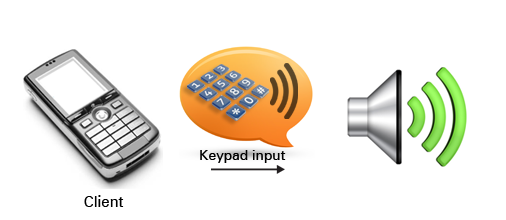
The DTMF payload type for telephone events is suitable for both gateway and end-to-end scenarios. In case of the gateway scenario, an Internet telephony gateway connects a packet voice network to the PSTN network in this way recreates the DTMF tones or other telephony events and injects them into the PSTN network.
Because of the fact that DTMF digit recognition takes several tens of milliseconds, the first part of the digit (the first few milliseconds) arrives as regular audio packet. In this way, careful time and power need to be aligned between the audio samples and the events. This helps avoid false digit generation at the receiver.
DTMF digits and named telephone events are carried as part of the audio stream. The same sequence number and time-stamp base need to be used by them as the regular audio channel in order to make audio waveform generation simpler at a gateway.
By default, the clock frequency is 8,000 Hz, however it can be redefined when the dynamic payload type is assigned. This format achieves a higher redundancy even if sustained packet loss occurs than the method recommended for the Voice over Frame Relay Implementation Agreement.
Time alignment and power levels are irrelevant if an end system is directly connected to the Internet and tone signals do not need to be generated. These systems rely on PSTN gateways or Internet end systems in order to generate DTMF events and do not perform their own audio waveform analysis.
In cases where exact timing alignment between the audio stream and the DTMF digits or other events is not important and data is sent unicast, for example in Internet interactive voice-response (IVR) systems, a reliable control protocol can be preferable to use instead of RTP packets.
How does it work?
DTMF keypads are laid out in a 4X4 matrix. Each of the rows stand for low frequency and each of the columns represent high frequency therefore pressing one key will result a sine wave for the two frequencies. So by pressing buttons on the keypad, a connection is created that will generate two tones at once. These tones identify the key you have pressed and your call can be switched accordingly. If you use a DTMF keypad to remotely control equipment, the tones identify what unit you want to control and which unique function you want it to perform.